
Older properties have character, but what sits underneath them can be a mystery. Decades of renovations, extensions, repairs, and emergency fixes often mean services were moved, patched, or rerouted without complete documentation. Add ageing public infrastructure, tight urban corridors, and multiple trades working across the same site, and you have the perfect setup for unexpected hits during excavation, drilling, or coring.
That is why professional utility locating is essential for older homes, strata blocks, schools, warehouses, and council assets. The goal is simple: confirm what is actually in the ground, reduce assumptions, and make the job safer and more predictable.
Why are older sites harder to locate accurately?
On newer builds, plans are usually clearer, and service routes are more consistent. On older sites, you may encounter abandoned lines, mixed materials, shallow runs, non-standard depths, and private services that were never included in drawings. Even when you have plans and Dial Before You Dig information, the real world can differ.
With professional service locating, you are not relying on best guesses. You are using detection, surface evidence, and practical verification to locate likely alignments, identify hazards, and decide where careful exposure is needed.
The common risks in ageing infrastructure
Older suburbs across Sydney and NSW often include layered networks: power, gas, water, stormwater, sewer, and communications, sometimes running close together. A single strike can cause downtime, safety incidents, environmental issues, and expensive rework. For commercial and industrial sites, the risk increases again, because you may have private fire services, trade waste, old pits, or unknown conduit runs.
A well-planned locating service booking reduces the chance of service strikes and helps teams coordinate trenching, boring, and footing work with fewer surprises.
Using the right methods for the right materials
No single tool is perfect on every site. A solid approach combines methods based on what is likely present and what access is available. Ground penetrating radar can help identify many non-metallic services and subsurface changes, while electromagnetic methods can trace conductive utilities, certain cables, and sondes, especially when you can connect or access an entry point.
The practical benefit of underground service detection is not just locating; it is confidence. You want clear markings, a plain language explanation, and an honest view of any limitations, so your crew knows where caution is required.
Where CCTV pipe inspection adds real value
On older properties, drainage and sewer lines are common trouble spots. Pipes can sag, crack, collapse, or fill with roots over time. This is where CCTV pipe inspection is a smart add-on. Instead of guessing where a blockage or break is, the camera provides visual confirmation of pipe condition, junctions, and direction, helping you avoid unnecessary digging and focus repairs precisely.
When paired with utilities location services, CCTV supports better decision-making for plumbers, builders, and facility managers, especially when you are planning upgrades, relining, or remediation works.
Why concrete scanning matters for older buildings
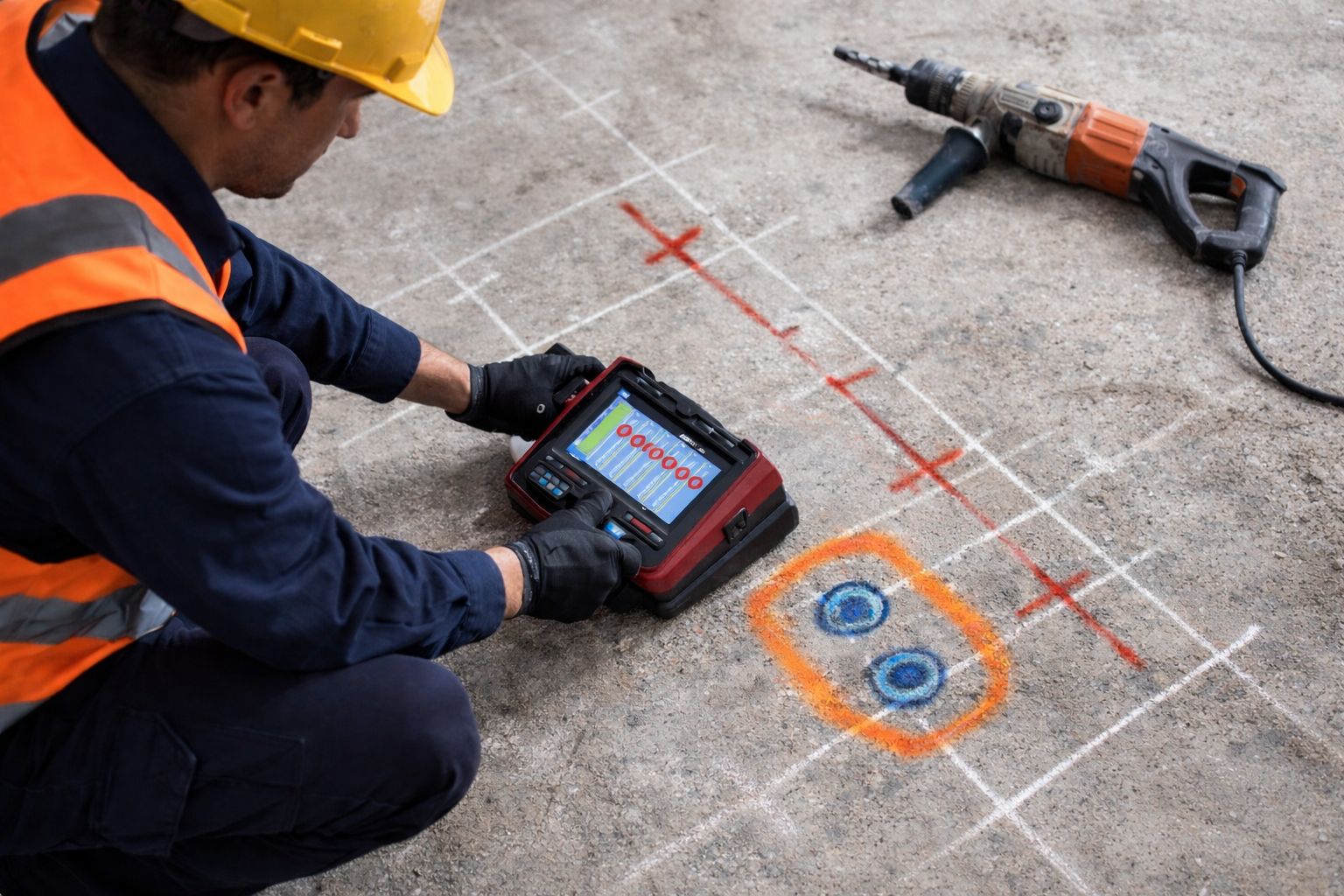
Many older buildings have hidden risks in slabs and walls, including rebar, conduits, and in some cases, post tension elements in later upgrades. Drilling or coring without a scan can damage embedded services or compromise structural elements. Concrete scanning services help identify hazards before you cut, drill, or core, which is critical in renovations, plant rooms, and commercial fit-outs.
On ageing infrastructure projects, utilities location services plus concrete scanning services can be the difference between a smooth program and a costly delay.
What to expect from a quality locate on an older site
A professional job typically includes a brief scope discussion, a site walk, detection using suitable methods, and clear surface markings. For complex sites, a mud map or reporting can provide an ongoing reference for the build team and future trades.
Most importantly, the locator should communicate what is confirmed, what is probable, and what may need careful verification. That transparency is exactly what utility location services should deliver, especially when the site history is unclear.