Underground services are a critical part of modern infrastructure, yet they are often taken for granted until something goes wrong. One wrong move during excavation can damage essential assets, cause serious safety hazards, and result in expensive project delays. Many of these incidents happen because of avoidable underground utility detection mistakes made before or during work.
Understanding these common errors helps contractors, builders, and property owners make safer decisions and protect existing services on site.
Relying Only on Service Plans
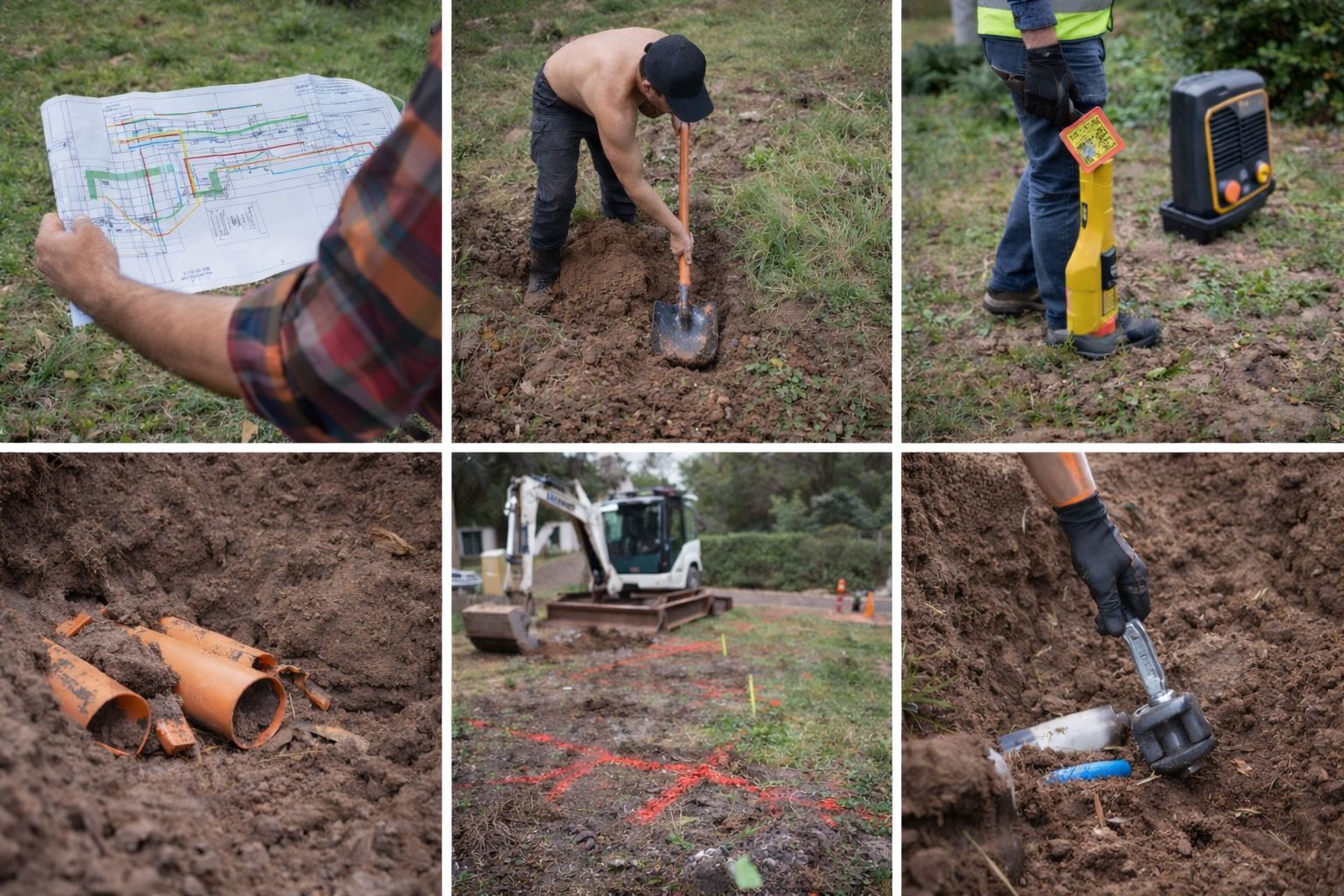
One of the most common errors is assuming that service plans are accurate and complete. While Dial Before You Dig plans are a valuable starting point, they usually show approximate locations only.
Plans may be outdated, incomplete, or missing private services entirely. Depth information is rarely reliable. Without on-site verification, excavation teams risk striking services that were never shown on drawings.
Professional utility locating combines plans with physical detection methods to confirm exact positions and depths.
Skipping On-Site Utility Locating
Another major mistake is starting excavation without proper on-site detection. Visual inspection alone cannot identify buried cables or pipes, especially non-metallic services.
Modern locating methods, such as ground penetrating radar and electromagnetic locating, are essential for accurate results. These tools allow trained technicians to trace utilities safely and precisely before any ground disturbance begins.
Skipping this step increases the likelihood of service strikes, injuries, and costly repairs.
Using Only One Detection Method
No single technique can identify every type of underground service. A common mistake is relying on just one method and assuming it will detect everything.
Electromagnetic locating works well for conductive utilities, but cannot detect plastic or concrete pipes. Ground penetrating radar is excellent for non-metallic services, but can be affected by ground conditions.
Professional projects often combine multiple methods, including concrete scanning services and cable locating, to ensure no services are missed.
Ignoring Drainage and Sewer Lines
Many people focus on power and gas services while overlooking sewer and stormwater infrastructure. This is a serious oversight.
Drainage pipes are often made from non-metallic materials and may not appear on plans. Damaging these pipes can cause flooding, contamination, and structural issues.
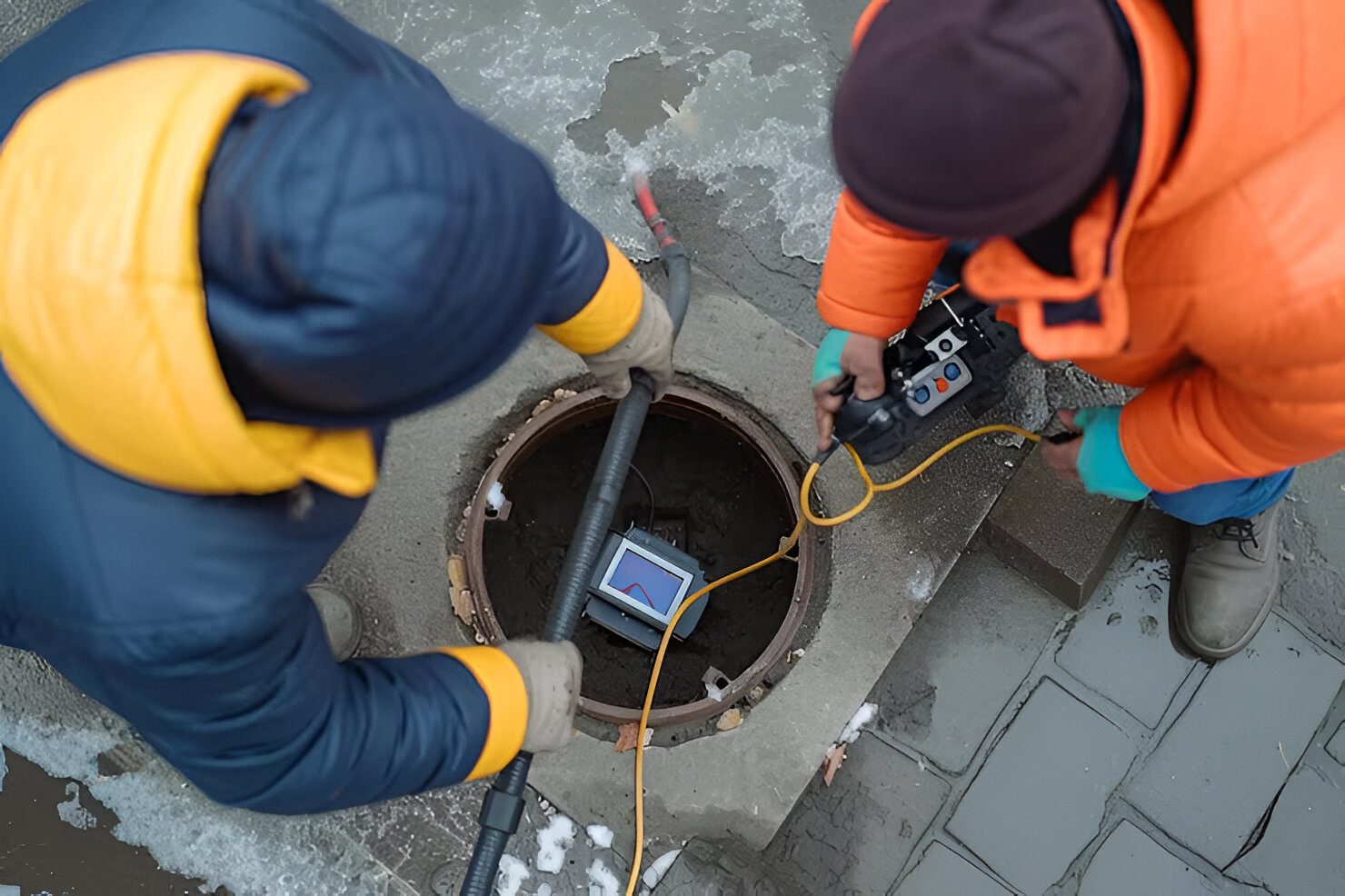
CCTV pipe inspection is a reliable way to identify underground drainage lines, confirm alignment, and assess condition before excavation or construction.
Poor Marking and Communication on Site
Even when utilities are located correctly, problems still occur if markings are unclear or ignored. Poor communication between locating technicians and excavation crews is a frequent cause of damage.
Services should be clearly marked on the ground using standard colour coding. Site plans and reports must be shared with all workers involved. Changes to the excavation scope should always trigger a review of utility information.
Clear communication is just as important as accurate detection.
Assuming Private Services Do Not Exist
Private utilities are often installed after the original construction and may not be recorded anywhere. Assuming they don’t exist is one of the most dangerous underground utility detection mistakes.
Private electrical cables, water lines, and drainage systems are common on residential, commercial, and industrial sites. Only professional locating methods can reliably identify these hidden services.
Failing to account for private infrastructure can lead to unexpected damage and liability issues.
Not Updating Utility Records
Utility detection should not be treated as a one-time task. Conditions change, services are added, and layouts evolve over time.
Failing to update utility maps and reports creates long-term risks for future work. Accurate utility mapping and mud mapping services help maintain reliable records that support safe excavation now and in the future.
Rushing the Detection Process
Tight deadlines often lead to shortcuts. Rushing utility detection increases the risk of missed services, inaccurate markings, and incomplete reporting.
Proper detection takes time, especially on complex sites. Allowing sufficient time for scanning, verification, and documentation helps avoid errors that cost far more to fix later.
Avoiding these errors starts with planning, patience, and professional expertise.