Pipe and Cable Locating
Elite Pipe & Cable finds and marks the underground pipes and cables in your dig area across Sydney and the Illawarra, so your crew can excavate, trench, bore or cut with confidence.
We work with builders, plumbers, electricians, civil contractors, landscapers and homeowners.
One Locate. Every Service in Your Dig Area.
You don’t need to book a gas locate, then a water locate, then a cable locate. Pipe and cable locating is all part of the one underground utility locating service.
When we arrive, we sweep the whole area you plan to dig. We don’t pick and choose what to find. If a service could be hit by your excavation, we locate it, mark it and tell you about it, whether it’s a gas main, a sewer line or a forgotten cable to an old shed.
That matters, because the service that causes damage is usually the one nobody was expecting.
The sections below explain what’s involved for each type of pipe and cable, and who usually needs them found. It’s here to help you understand the job. You don’t need to choose from it.

Pipe Locating
Underground pipes are made of everything from steel and copper to PVC, poly and clay. Each one needs a different approach. Here’s what’s involved in finding the most common ones.
Gas Line Locating
Gas is the service everyone worries about most, and for good reason. A damaged gas line means an evacuated site, a call to the network operator and a serious safety risk.
Older gas mains and services are often steel or cast iron, which we can trace with electromagnetic signal. Newer gas pipes are usually yellow polyethylene. These are often laid with a tracer wire we can put a signal onto. Where there’s no tracer wire, we use ground penetrating radar (GPR) to pick up the pipe.
We mark the route of the network main in the street, as well as the private service line running from the meter into the house or building.
Water Pipe Locating
Water mains run along most streets, and every property has a service line from the meter to the building. Those private lines don’t appear on BYDA plans, and they’re often not where the house plans say they are.
Copper and older galvanised pipes can be traced with signal. PVC and poly pipes aren’t conductive, so we rely on GPR or access points to find them. Locating the private water line also helps when you’re tracking down a suspected leak or planning a new connection.
Sewer Line Locating
Sewer lines carry wastewater from the house to the main, usually running deeper than other services and on a fall. Many older properties still have clay pipes, which crack and shift easily if they’re disturbed.
Because clay and PVC sewer pipes aren’t conductive, electromagnetic locators can’t trace them. We use ground penetrating radar (GPR) instead, scanning across the dig area to pick up the pipe and follow it from the house towards the main. Inspection openings, gullies and boundary traps help us confirm the route, and we mark the line and its approximate depth on the ground. This also shows where the property connects to the sewer main.
Stormwater Locating
Stormwater pipes collect roof and surface water and carry it to the kerb, a council pit or a drainage easement. They’re usually shallow PVC, which makes them easy to hit with an excavator, a post hole auger or a trencher.
We find stormwater lines with push rod cctv through downpipes and pits, or with GPR. We also trace where the line discharges, which is useful when the drainage path on the plans doesn’t match what’s on site.
Cable Locating
Underground cables are easy to damage and expensive to repair. Hitting one can cause injury, cut power or internet to a whole street, or leave you with a repair bill from the network owner.
Electrical Cable Locating
Power cables run from the street network to the property’s main switchboard. From there, private cables often feed sheds, garages, pool equipment, garden lights, gates and granny flats. The street network shows up on BYDA plans. The private cables after the meter don’t.
We locate live cables passively by picking up the field they give off, and we put a signal onto cables where we can get a connection. Every power cable we find in your dig area is marked, including old or redundant runs that may still be live.

Telstra, NBN & Communications Cable Locating
Comms networks run through pits and conduits along footpaths and nature strips, with lead-in cables to each property. These include older copper phone lines, NBN cabling and fibre optic.
Copper cables can be traced with signal. Fibre optic isn’t conductive, so we locate it through its conduit, tracer wire or with GPR, using the pits as reference points.

Cables in Conduits and Slabs
Electricians often need to know exactly where a cable runs before cutting into a conduit, slab or wall. Cables don’t always follow the shortest path. Old runs get extended, rerouted or abandoned in place, and drawings from past renovations are rarely accurate.
We trace the cable along its route by putting a signal onto it, or by picking up the field from a live circuit. We then mark its path on the surface, so you can cut, core or chase in the right spot without hitting it. Any other cables or services we find in the same area are marked too.
Streetlight & Traffic Signal Cables
Council and road authority cables for streetlights, traffic signals and park lighting often run shallow along verges, footpaths and medians. They’re easy to miss, and damaging one can black out a street or knock out an intersection’s signals, with a repair bill to match.
These cables don’t always appear clearly on BYDA plans, and older runs may sit well off their recorded position. We locate them with signal from poles, pits and controller cabinets where we can get access, or passively when they’re live. Their route is then marked along with every other service in your dig area.
Who We Locate For
| Who | Typical job | Services they’re most worried about |
|---|---|---|
| Builders | Footings, extensions, knockdown rebuilds, granny flats | Sewer, stormwater, gas, power |
| Plumbers & gasfitters | New connections, repairs, drainage | Gas, water, sewer, stormwater |
| Electricians | Trenching to outbuildings, cutting conduits and slabs | Power cables, comms, gas |
| Civil & excavation contractors | Roadworks, trenching, under-boring | Gas mains, water mains, comms, power |
| Pool builders | Pool excavation | Sewer, stormwater, power |
| Landscapers & fencers | Post holes, retaining walls, irrigation | Stormwater, water, power, comms |
| Solar & EV installers | Trenching to sheds, carports, chargers | Power cables, gas |
| Homeowners | DIY projects, planning renovations | Everything on the property |
BYDA Plans Are the Start, Not the Answer
A BYDA enquiry gets you plans from the network owners, and you should always lodge one before you dig. But those plans show approximate positions, usually only up to the property boundary. They don’t show private services like the water line to your house, the cable to your shed or the stormwater to the kerb.
An on-site locate checks the plans against what’s actually in the ground, and finds the services the plans leave out.
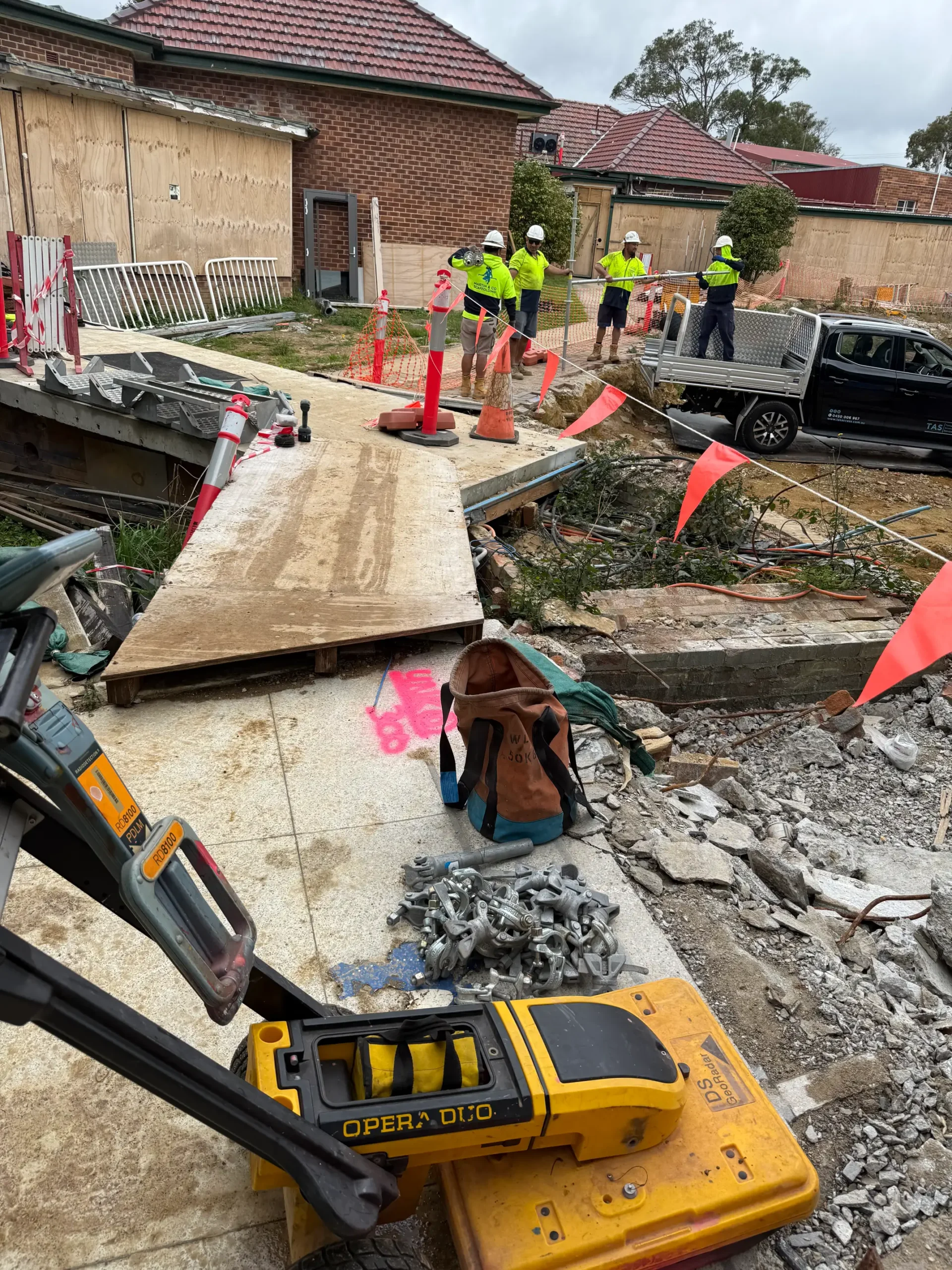
What You Get
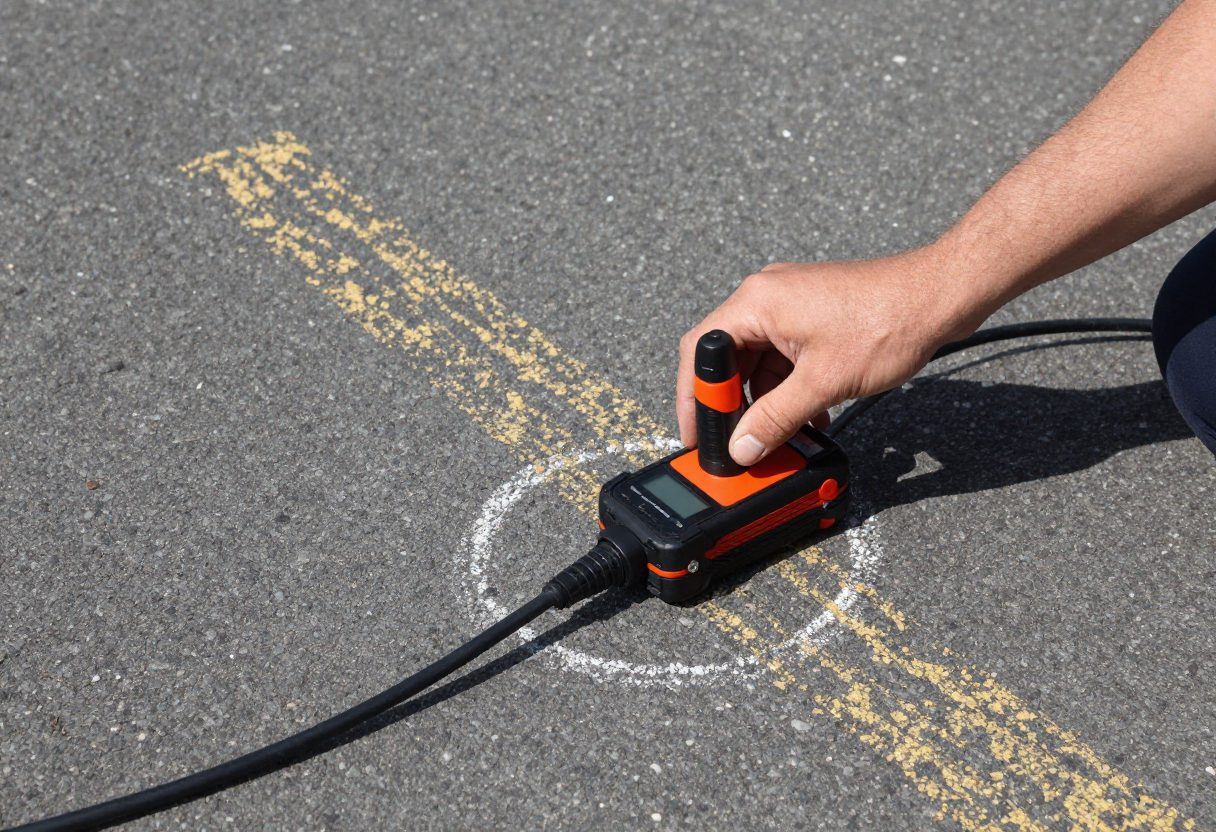
- Every detectable pipe and cable in your dig area found and marked on the ground
- Marks colour-coded by service type, so your crew knows what they’re dealing with
- Approximate depths where they can be measured
- A clear rundown on site of anything we found that could affect your job
Frequently Asked Questions
Can I book just a gas locate or just a water locate?
Every job covers all services in your dig area. We don’t leave anything out, because the service you didn’t ask about is often the one that gets hit.
Do I still need a locate if I've got my BYDA plans?
Yes. BYDA plans show network assets in approximate positions and usually stop at the boundary. A locate confirms where things really are and finds the private services the plans don’t show.
Can you find plastic pipes?
Yes. PVC and poly pipes aren’t conductive, so we find them using GPR, tracer wire where it’s been laid, or a sonde pushed through the pipe from an access point.
How deep can you locate?
It depends on the service, the soil and the method. We’ll give you approximate depths where we can measure them, and always recommend careful hand digging or vacuum excavation near marked services.
Book Your Pipe & Cable Locate
Don’t dig blind. Whether you’re on a building site in Sydney or a backyard in the Illawarra, we’ll find and mark what’s underground before you break ground.