Locating underground services accurately is one of the most critical steps before any excavation, construction, or renovation project. Hitting an unseen pipe or cable can lead to serious safety risks, service outages, costly repairs, and legal issues. That’s why understanding proper utility location techniques is essential for builders, plumbers, electricians, landscapers, and property owners across Australia.
This guide explains the safest and most reliable ways to find underground utilities while protecting existing services and staying compliant with regulations.
Why Accurate Utility Locating Matters
Underground utilities include water pipes, sewer lines, stormwater drains, gas pipes, electrical cables, fibre optic lines, and communication infrastructure. Many of these services aren’t visible on the surface, and plans are often outdated or incomplete.
Failing to locate services correctly can result in:
- Safety hazards, including gas leaks and electrical strikes
- Project delays and unexpected costs
- Damage to essential infrastructure
- Fines and liability claims
Using professional detection methods significantly reduces these risks and ensures work can proceed safely.
Common Types of Underground Utilities
Before starting any locating work, it helps to understand what may be buried at a site. Typical underground services include:
- Electrical and communication cables
- Gas pipelines
- Potable water supply lines
- Sewer and stormwater drainage
- Fire services
- Private services that may not appear on public records
Each utility type requires a different detection approach, so relying on a single method is rarely sufficient.
Professional Methods Used to Locate Underground Utilities
Dial Before You Dig is Only the First Step
Dial Before You Dig provides essential asset plans, but these plans indicate approximate locations only. They do not confirm depth, accuracy, or private services. Relying solely on plans increases the risk of service strikes.
Ground Penetrating Radar (GPR)
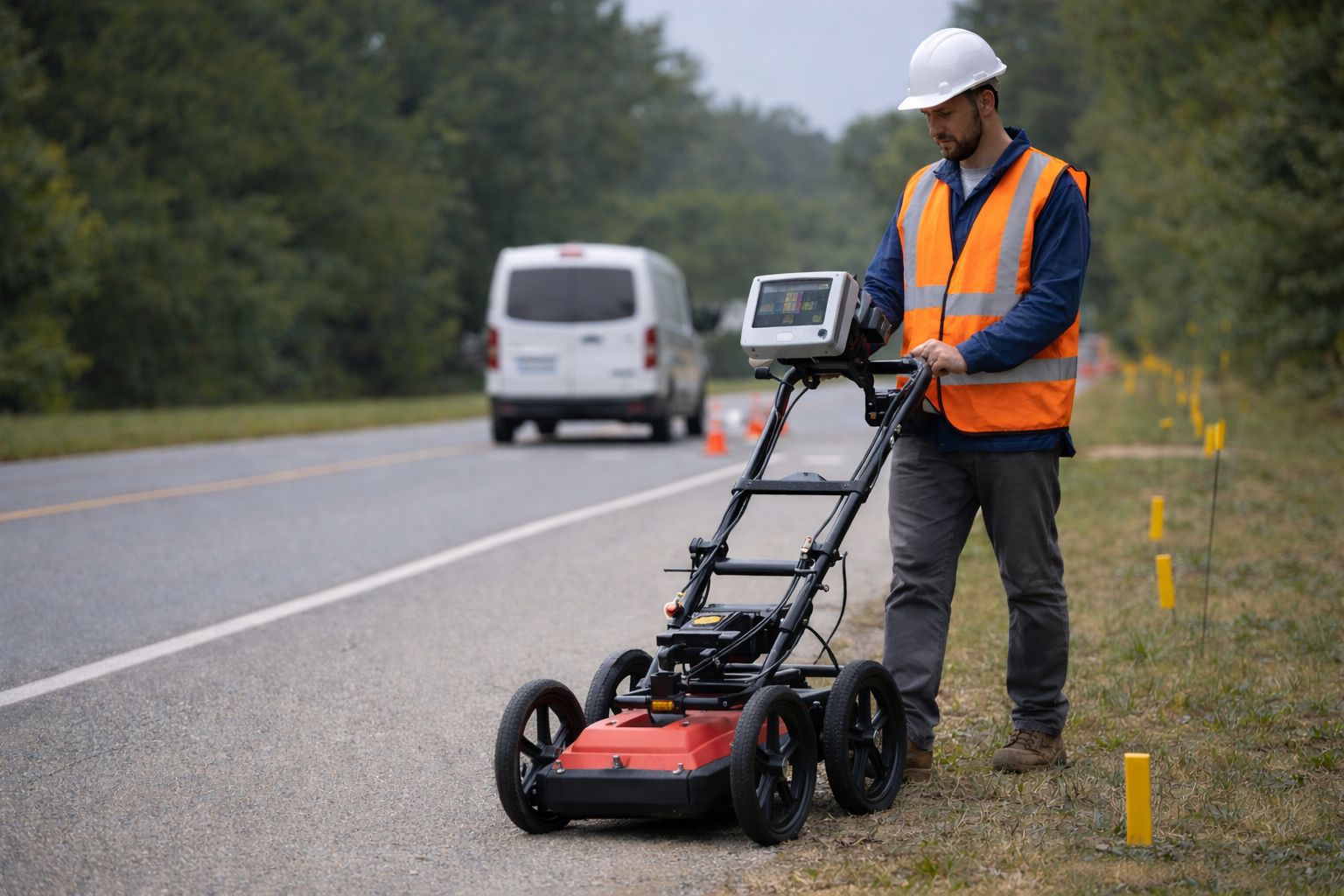
Ground Penetrating Radar is one of the most advanced methods used to detect underground services. It works by sending radar signals into the ground and analysing reflections from buried utilities.
GPR is highly effective for locating:
- Non-metallic utilities such as PVC and concrete pipes
- Electrical conduits
- Void detection
- Concrete scanning before cutting or drilling
This method is commonly used as part of professional concrete scanning services and is ideal when accuracy is critical.
Electromagnetic Cable and Pipe Locating
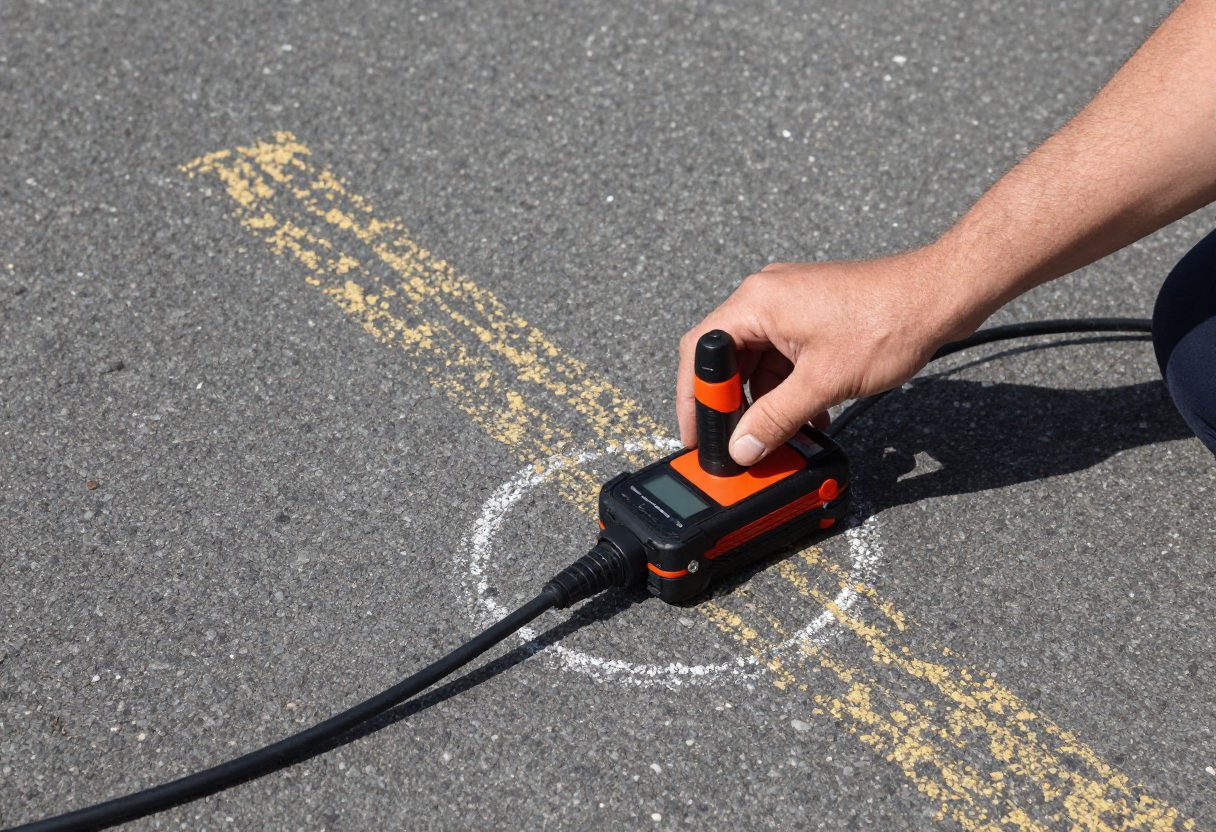
Electromagnetic locating uses signals transmitted through conductive utilities such as metal pipes and cables. A receiver then traces the exact path and depth of the service.
This technique is reliable for:
- Power cables
- Telecommunications lines
- Metal water and gas pipes
It is often used alongside GPR to ensure complete coverage.
CCTV Pipe Inspection
When working around drainage systems, CCTV pipe inspection is one of the safest ways to identify pipe locations and conditions. A camera is fed through the pipe to confirm alignment, depth, and structural integrity.
This method is particularly useful for:
- Sewer and stormwater lines
- Blocked or damaged pipes
- Renovation and repair planning
Utility Mapping and Reporting
Professional utility locating goes beyond detection. Accurate mapping and reporting are essential. Detailed utility maps help contractors plan excavation zones, machinery access, and safe digging boundaries.
Many projects also require mud mapping services to document underground assets for compliance, handover, or future reference.
How to Locate Underground Utilities Safely Step by Step
Start by gathering available service plans and site information
- Engage a professional utility locator before excavation begins
- Use multiple locating methods for verification
- Mark detected services clearly on the ground
- Prepare accurate reports and as-built drawings
- Excavate carefully using non-destructive methods where required
Following this process ensures underground services are identified accurately and protected throughout the project lifecycle.
Why DIY Methods Are Not Recommended
Some people attempt to locate utilities using basic tools or surface-level assumptions. This approach is risky and often inaccurate.
DIY methods fail because:
- Many utilities are non-metallic and undetectable without advanced equipment
- Depth and alignment cannot be estimated visually
- Private services are easily missed
- Errors can lead to serious damage and injury
Professional locating services provide confidence, accuracy, and accountability.
When You Must Use Professional Utility Locating
You should always use professional services when:
- Excavating near buildings or infrastructure
- Working on commercial or industrial sites
- Cutting or drilling concrete slabs
- Installing new services near existing ones
- Compliance documentation is required
Knowing how to locate underground utilities correctly is not just best practice; it is often a legal and contractual requirement.