
Utility Locating Services Wollongong Illawarra Region

CERTLOC-Certified Locators | Trusted by Sydney Councils and Builders

Why Choose Elite Pipe & Cable for Utility Locating in Wollongong

Elite Pipe & Cable Locating gives builders, contractors and property owners across Wollongong a clear, accurate picture of what’s underground before the first shovel goes in. Our CERTLOC-certified locators combine proper training, modern detection gear and years of hands-on work across the Illawarra.

Hands-On Field Experience

Time in the field has taught our team to read signals accurately and tell the difference between power, gas, water, comms and drainage lines.

local expert
Skilled With Advanced Equipment

We're confident operators of ground penetrating radar (GPR), electromagnetic locators and CCTV pipe cameras, giving reliable positions for what's below.

Compliance Built Into Every Job

We're across the local regulations and safety standards that apply to underground work, so every locate is done the right way from start to finish.

capability icon
Careful, Accurate Marking

We detect and mark each service thoroughly, then explain what the markings mean and provide guidelines if needed, so crews can avoid dangerous strikes and costly service interruptions.

safety icon
Quick Thinking on Difficult Sites

When signals interfere or utility plans don't match what's in the ground, we troubleshoot on the spot and still deliver clear results.
Wollongong's Local Utility Locating Team

Our underground utility services span the entire Illawarra region and reach all the way to Sydney. Wollongong, a city much closer to home for us, is a place we always cater to. In fact, most of our clients are from this coastal city.

On commercial sites across Wollongong, a common finding is a fire service line that doesn’t appear on Before You Dig Australia (BYDA) plans at all, because it’s privately owned once it crosses the property boundary, even though it’s often the largest pipe on site feeding the hydrants, sprinklers and booster assembly. We also trace a lot of gas services, from newer polyethylene lines that need GPR to pick up, to older steel mains still sitting under parts of the CBD.

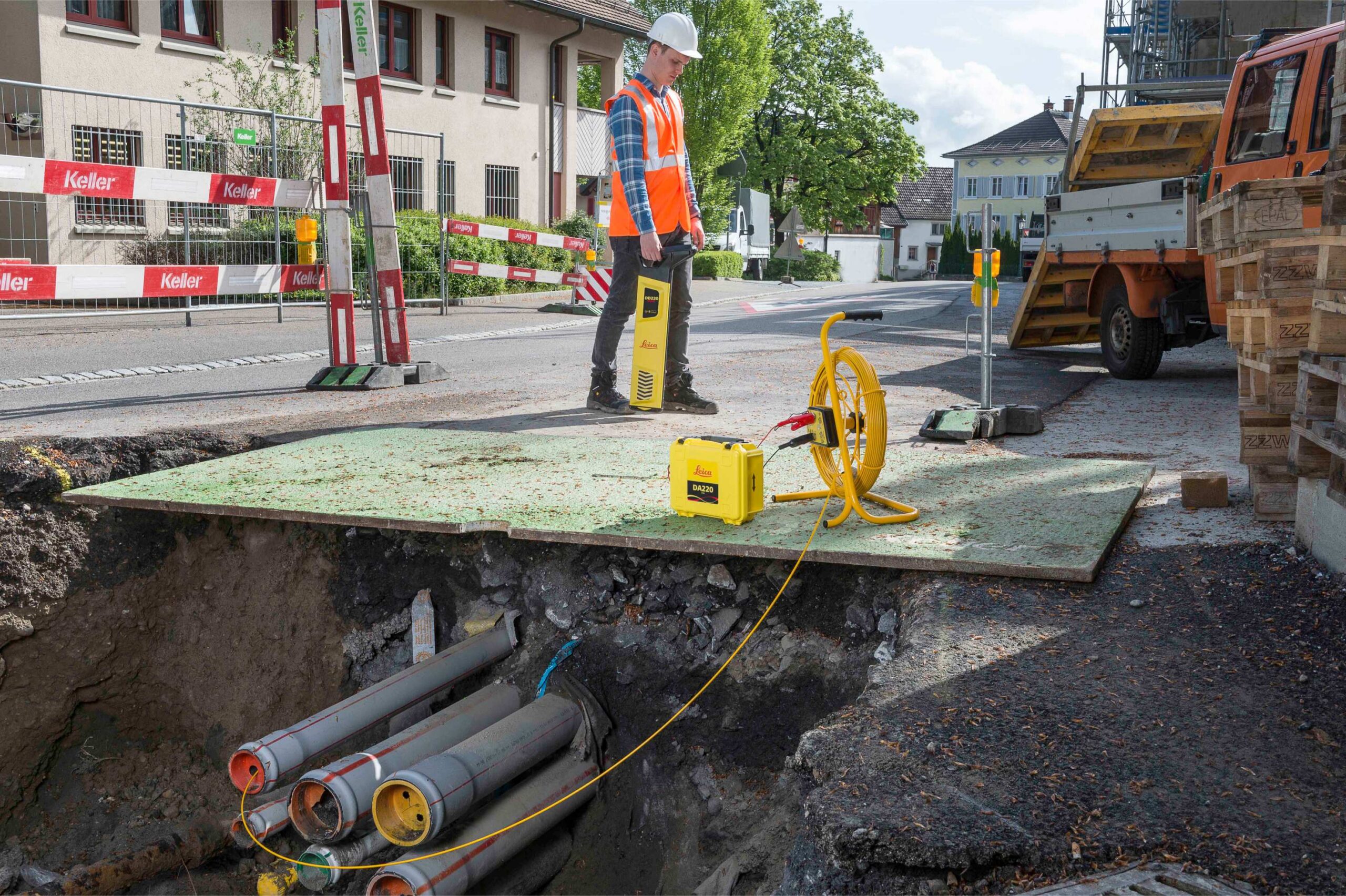
Worker using a utility locating device to trace underground cables and pipes before excavation.

Our Underground Locating Services in Wollongong

We carry out the scanning and locating ourselves, on site, with the right tool for each job.

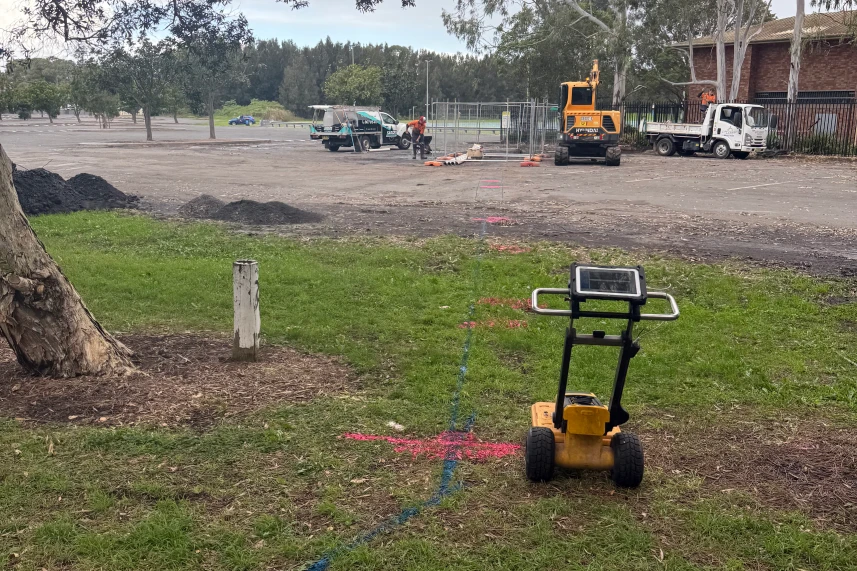
Site view with multiple utility locating equipment

Underground Service Locating

We locate and mark gas and water lines, electrical cables (live and decommissioned), sewer pipes, stormwater drains and communication lines, including non-conductive pipes that standard cable locators can't pick up.
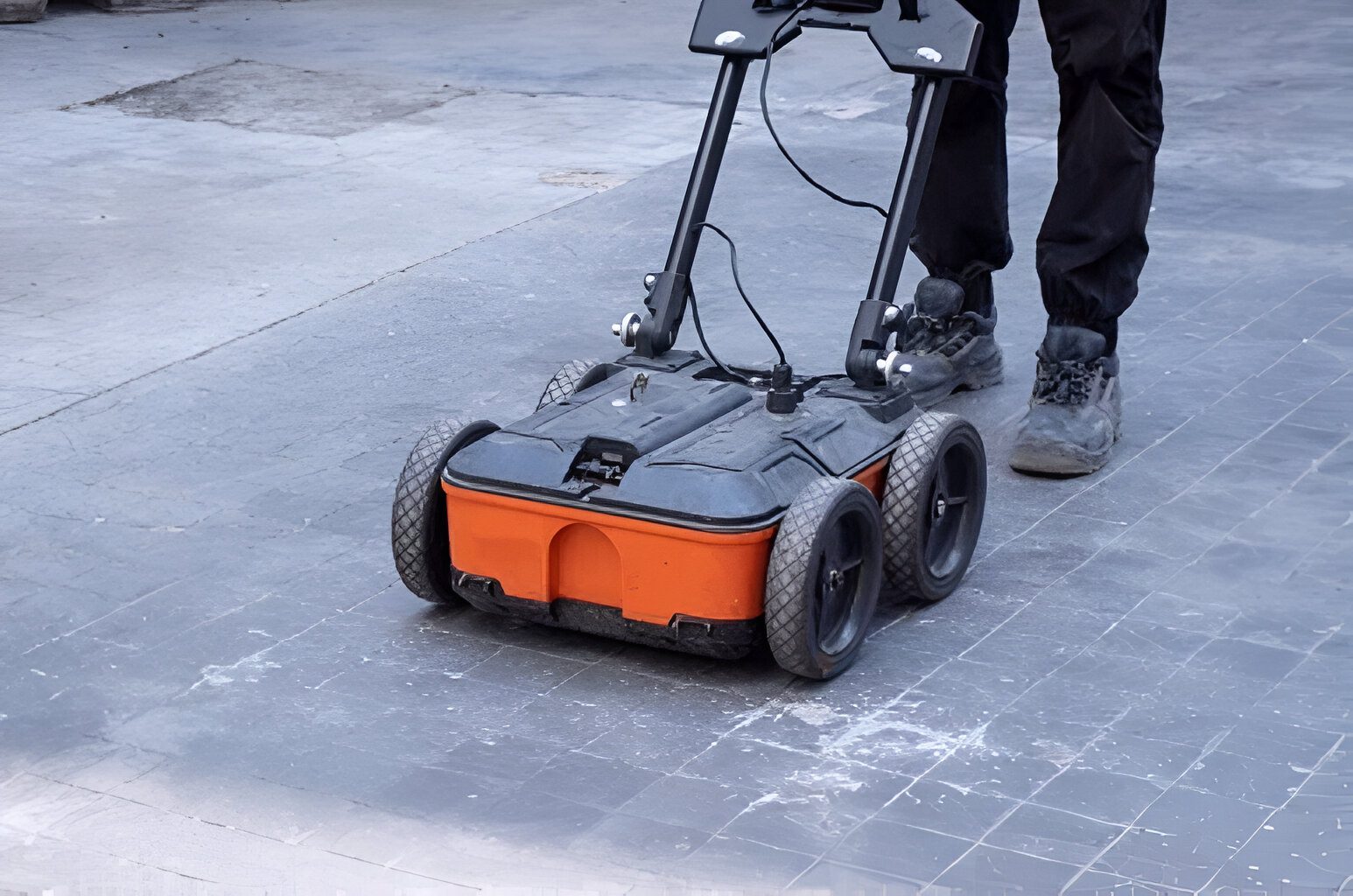
A technician using a ground penetrating radar scanner to perform concrete utility locating services.

Ground Penetrating Radar (GPR) Scanning

GPR finds what electromagnetic locating misses, such as plastic, concrete and clay pipes, voids and abandoned services, and gives depth estimates across the site.
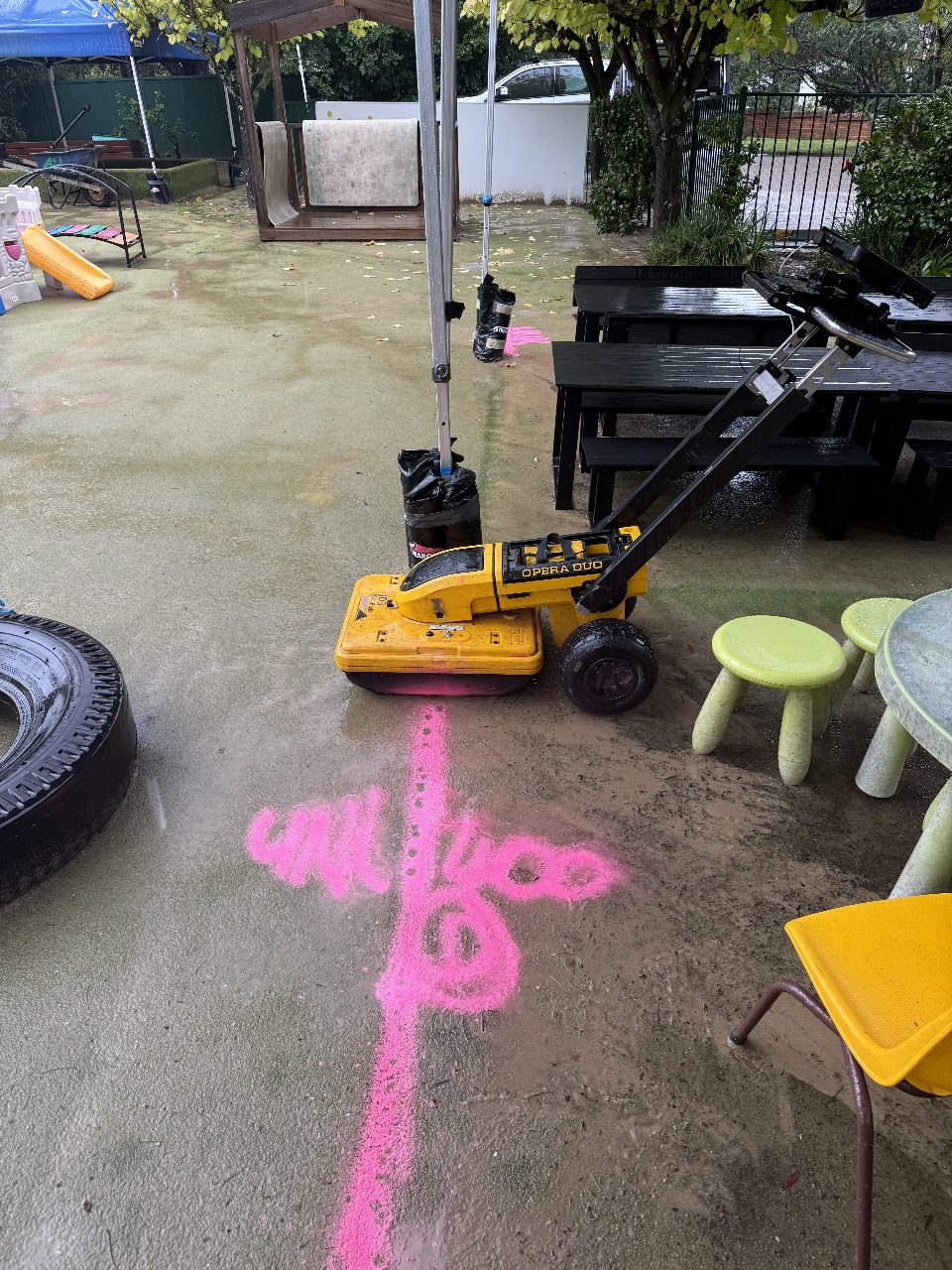
GPR scanning underground utilities with pink markings on the floor

Concrete Scanning and Rebar Detection

We scan concrete on site with GPR to locate rebar, live and deactivated electrical conduits, and post-tensioned cables before any drilling, coring or cutting begins.
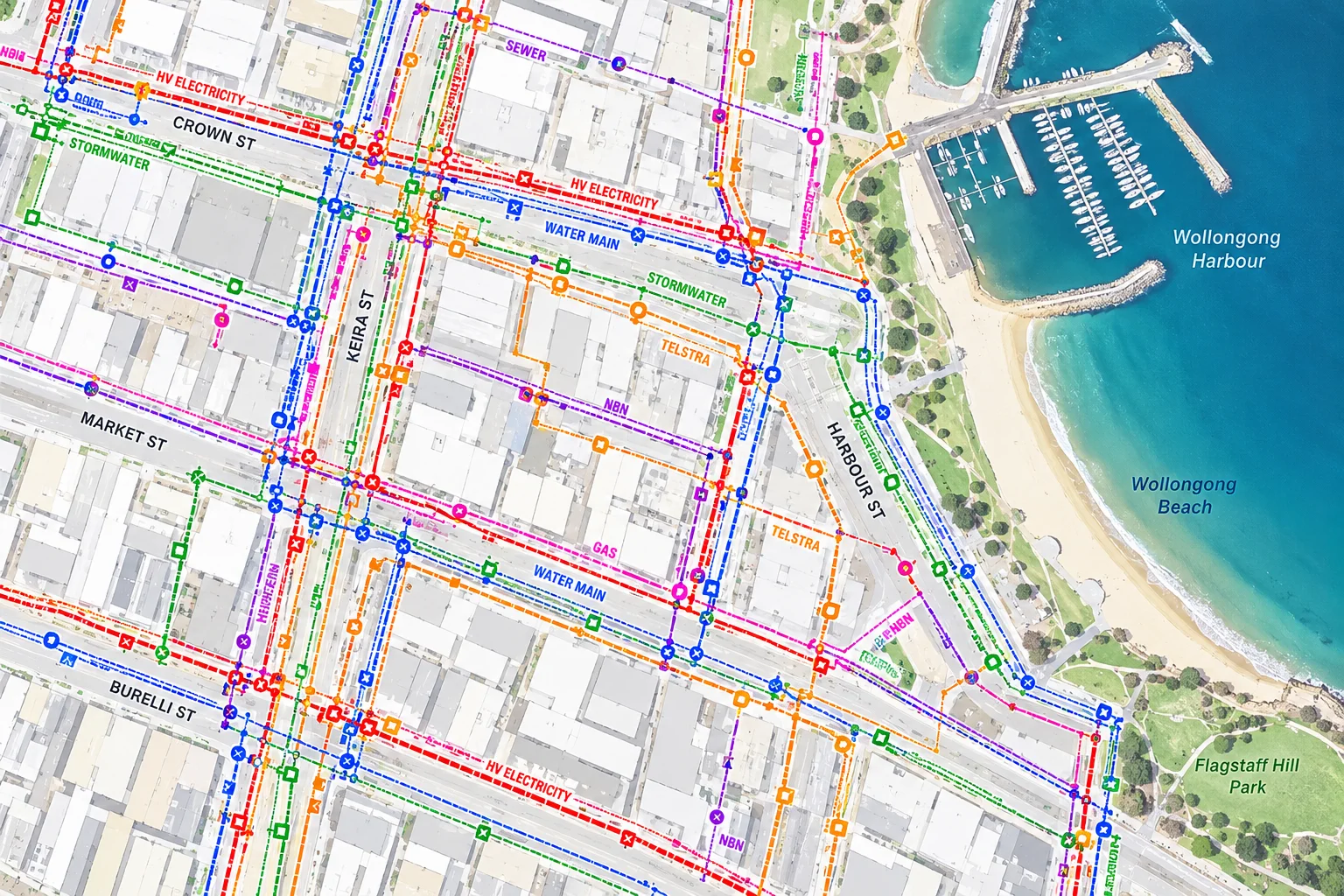
Utility mapping CAD example for Wollongong

Utility Mapping and CAD Deliverables

Our locators trace every underground service on site, including dead or abandoned cables and non-conductive pipes, then turn the findings into a mud map or an accurate CAD plan.
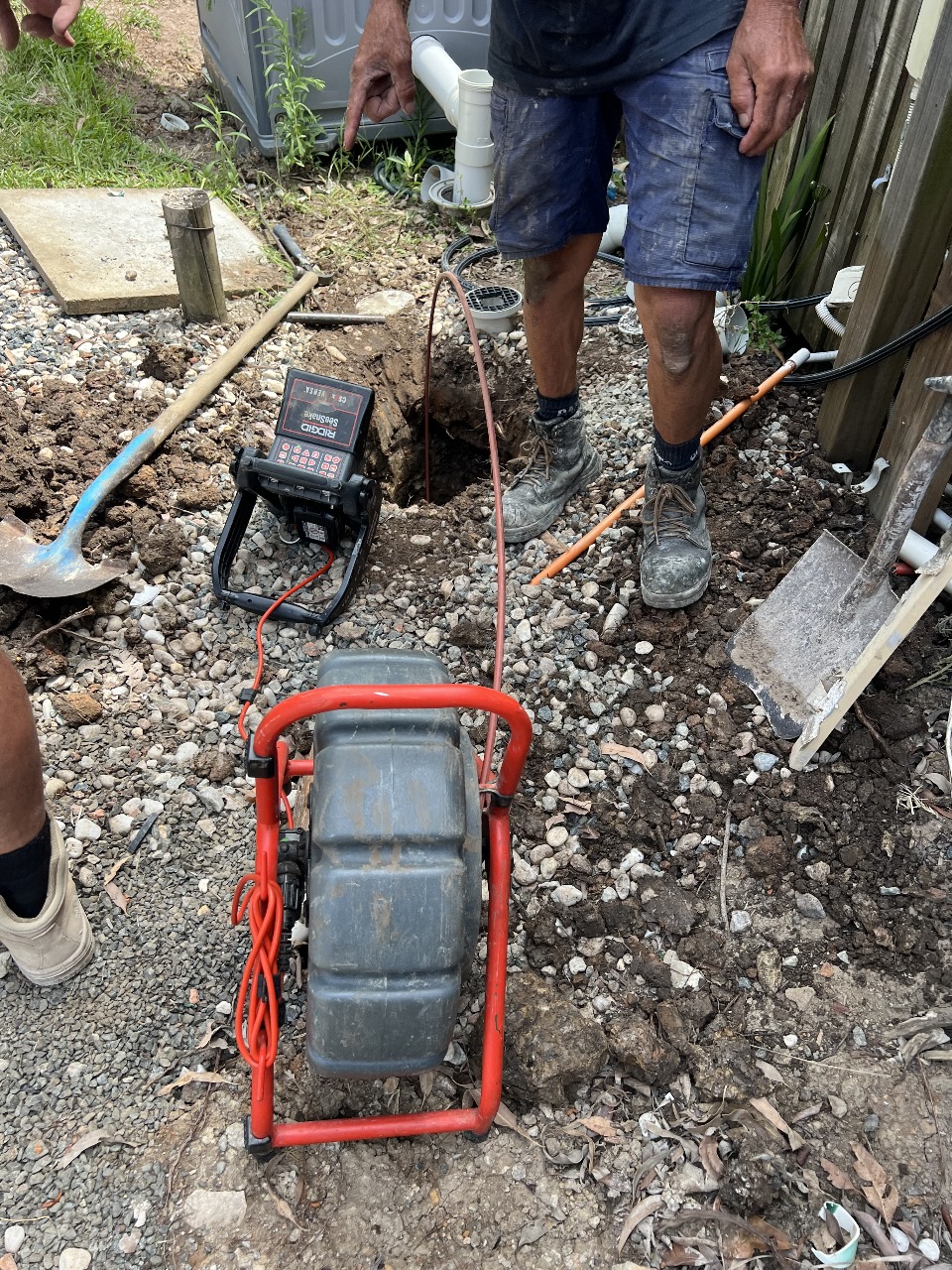
Our own CCTV Pipe Inspection devices inserted on an underground pipe

CCTV Pipe Inspection and Drain Surveys

Cameras go inside concrete, clay and PVC pipes to show what's actually in them, from root intrusion and blockages to cracks and collapsed sections, with each problem located from above ground.

What We Find Under Wollongong Sites

A typical commercial site in Wollongong has far more underground than the BYDA plans show, because those plans stop at the property boundary. On a standard job we locate:

Electrical

Consumer mains from the street pit, high-voltage feeds to on-site substations, and private cabling to lighting, signage, gates and EV chargers
gas-pipeline-icon
Gas

Services from the Jemena main to the meter, including old steel mains and plastic (PE) lines Water: the domestic supply and the separate fire service line

sewer icon
Sewer

Property connections to the Sydney Water main, often older clay pipe on established sites Stormwater: downpipe lines, pits, on-site detention tanks and lines to the kerb or council drains

Communications icon
Communications

Telstra and NBN conduits, plus private fibre on busier commercial strips

Repairs icon
Abandoned services

Dead cables and redundant pipes left behind from earlier buildings
Our Utility Locating Process

Every Wollongong job follows the same proven steps, so nothing is left to chance.

Site Assessment and Plan Review

We walk the site, look for pits, meters and other surface clues, and review any existing drawings or as-built plans.

Before You Dig Australia (BYDA) Checks

We gather the BYDA plans for the site so we know what the utility networks expect to find before scanning starts.

On-Site Scanning and Locating

Our team scans the entire site with GPR, electromagnetic locators and CCTV cameras to find every drain, pipe and cable, including live and deactivated electrical lines, non-conductive concrete, clay and plastic pipes, and anything blocking or damaging the inside of them.

Clear On-Site Markings

Each service is marked on the ground in colour-coded paint and flags, with its type and estimated depth, so excavation crews can see exactly where it's safe to dig.

Mud Maps, CAD Plans and Reports

We supply a mud map, full report or CAD-integrated plan for project records, and recommend potholing (also called service proving) to confirm exact depth near critical services.

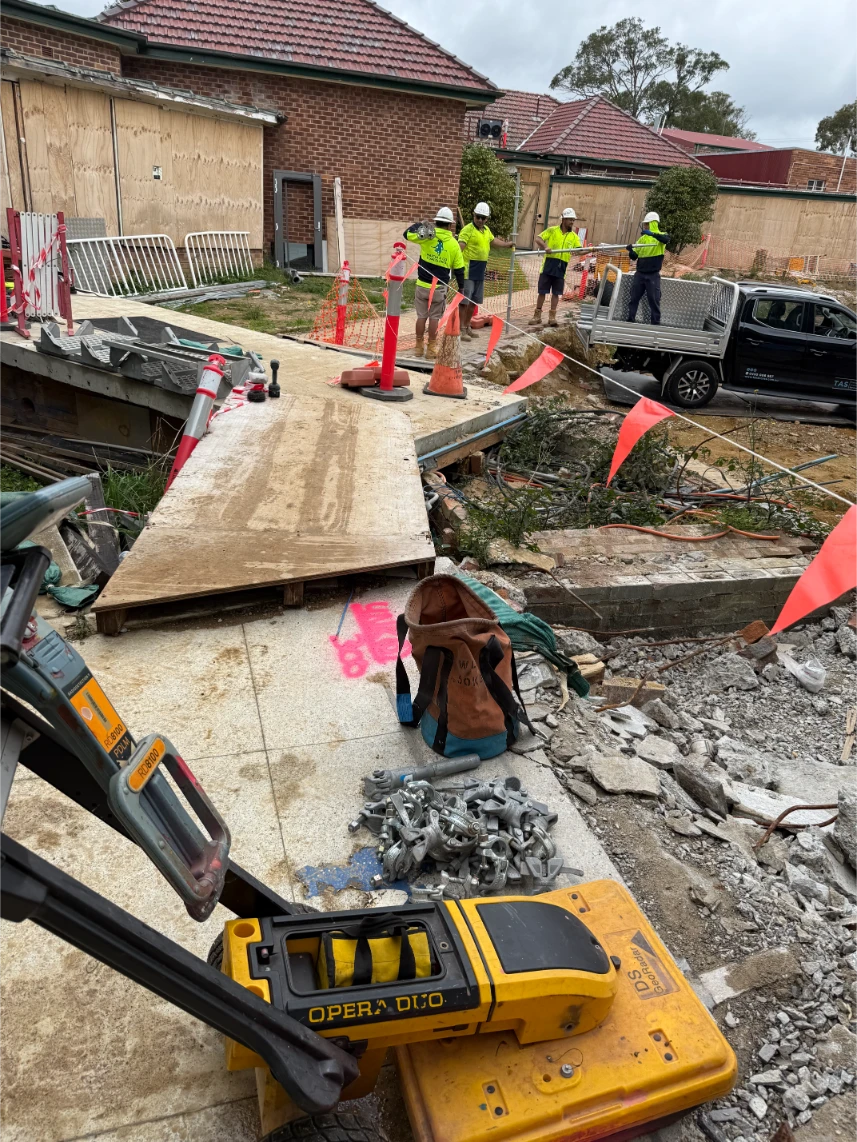
GPR scanning during a demolition and construction work in Wollongong

Who We Locate For

Our locating services suit anyone who needs to break ground safely in Wollongong:

  • Builders and construction companies preparing new developments
  • Civil and excavation contractors working in roads and footpaths
  • Plumbers and electricians running new services on established properties
  • Local councils and government projects
  • Commercial and industrial property owners planning upgrades
  • Strata managers and body corporates investigating drainage problems
  • Homeowners planning pools, extensions or landscaping

Whether it’s a single pit on a residential block or a full commercial site, every job gets the same careful approach.

Areas We Service Across Wollongong and the Illawarra

Our Illawarra-based team covers Wollongong and the surrounding region, including:

  • Wollongong CBD, North Wollongong and Gwynneville
  • Fairy Meadow, Corrimal and Towradgi
  • Thirroul, Bulli, Woonona and Austinmer
  • Helensburgh and the northern suburbs
  • Figtree, Unanderra and Berkeley
  • Port Kembla, Cringila and Warrawong
  • Dapto, West Dapto and Horsley
  • Windang, Shellharbour and Albion Park
  • Kiama and the South Coast

Not sure if we cover your suburb? Give us a call and we’ll let you know.

Why Underground Locating in Wollongong Takes Local Knowledge

Ground conditions in Wollongong change quickly between the beach and the escarpment, and the equipment behaves differently in each spot. Knowing what’s likely under a site before we get there saves time and gives you results you can rely on.

Coastal Sands: CBD, North Wollongong and Fairy Meadow

Sandy ground near the coast usually gives clean GPR readings. Closer to the beach, and for a few days after heavy rain, the water sits high and the radar can’t see as deep. Older CBD blocks often have old fill, broken brick and leftover footings that can look a lot like a service at first, so we take the time to tell them apart.

Escarpment Clay: Northern Suburbs and Western Areas

In Thirroul, Bulli, Woonona and up toward the foothills, the clay gets heavy and soaks up the radar signal. On these sites we rely more on electromagnetic locating and double-check the critical lines before anyone starts digging.

Industrial Fill: Port Kembla, Cringila and Unanderra

Years of heavy industry have left a lot of mixed fill in the ground, and it can make both GPR and EMF readings noisy. These sites also tend to have high-voltage feeds, large fire mains, process lines and plenty of redundant services nobody has recorded. Where conditions limit what we can confirm, our report says so plainly.

Lakeside and Growth Areas: Warrawong, Windang and Dapto

Near Lake Illawarra the ground often stays wet, which cuts how deep GPR can read. The newer estates around Dapto and West Dapto are usually more straightforward: plastic lines tend to have tracer wire, and the plans generally match what’s actually in the ground.

Stormwater After the Storms

When a big storm comes through, the drainage here gets put to work. That’s why stormwater pits, pipes and detention tanks make up a large share of the jobs we do locally. Pairing locating with a CCTV drain survey shows you where the drainage runs and what condition it’s in.

Frequently Asked Questions

Isn't a Before You Dig Australia (BYDA) enquiry enough?

No. BYDA plans show where utility networks are expected to run, usually only up to the property boundary, and they’re often approximate. Private services such as fire lines, car park lighting and stormwater aren’t on them, which is why a physical locate is still needed.

Yes. Non-conductive pipes don’t show up on standard cable locators, so we use ground penetrating radar and, where we can access the pipe, a CCTV camera with a sonde to trace its route.

Yes. Deactivated electrical lines and abandoned services often carry no live signal, so we use signal induction and GPR to find them. Unidentified lines are marked as unknown so crews treat them with care.

Locating gives an accurate position and an estimated depth, but ground conditions such as wet soil, clay and fill can affect readings. Near critical services we recommend potholing or vacuum excavation to confirm the exact depth before digging.

Every service is marked on the ground with paint and flags. We can also supply a mud map, a written report or a CAD-integrated plan for your project records.

Yes . We work on residential, commercial, industrial and government projects across Wollongong and the Illawarra, from single house blocks to large construction sites.

Our team is available for same-day and emergency locates across Wollongong, depending on availability.

Yes. Our team is CERTLOC certified and trained in modern underground detection methods.

Book Your Wollongong Utility Locate Today

Don’t start digging without knowing what’s below. A single service strike can mean injuries, outages, fines and weeks of delays, while a locate takes a fraction of the time and cost.

Call Elite Pipe & Cable for fast, accurate underground service locating anywhere in Wollongong and the Illawarra.

Submit an enquiry