
Excavation in Sydney is rarely straightforward. Between older suburbs with unknown private services, busy utility corridors, and constant upgrades, it is easy to assume the ground is clear when it is not. One wrong cut can take out power, gas, water, or communications, turning a simple trench into a safety incident and a costly delay.
Hiring a professional locating specialist before excavation is one of the most practical ways to reduce risk. It helps confirm what is likely present beneath the surface, where it runs, and where extra care is needed. Even when you have plans or Dial Before You Dig information, on-site conditions can differ due to changes over time, repairs, and undocumented works.
What a locator does that plans cannot
Plans are a starting point. They are not a guarantee of depth, exact alignment, or the presence of private services. A utility locator uses onsite detection to identify likely service routes, trace lines where possible, and apply clear markings that your team can follow during set out and excavation. On complex sites, the locator will also explain uncertainty areas and recommend safe verification steps.
Why scanning services matter before you dig
Different utilities and ground conditions require different methods. That is where scanning services play a key role. Depending on the site, a locator may use electromagnetic locating to trace conductive cables and pipes, and ground penetrating radar to help detect non-metallic services and subsurface changes. Using the right method, or combining methods, improves confidence and reduces the chance of missing something critical.
When scanning services are done properly, you get more than paint on the ground — you get context: what was confirmed, what is probable, and what needs careful exposure.
Mud mapping services help keep everyone on the same page
Paint markings can fade, get covered, or become confusing when multiple trades arrive. Mud mapping services provide a simple site reference showing detected services, key features, and relevant notes. This is especially useful for staged works, projects with handovers, or sites where the excavation scope expands over time.
If you are managing a crew, coordinating subcontractors, or documenting due diligence, mud mapping services help reduce miscommunication and keep the project aligned.
The real cost of not locating first
Service strikes can create direct repair costs, but the hidden costs often hurt more. Delays waiting for authorities or network owners, rebooking plant and labour, traffic control extensions, and reputational damage with clients. In some cases, there are compliance issues and incident reporting requirements. A utility locator helps you avoid the scenario entirely, or at least reduce it to a controlled verification process rather than an emergency.
When you should book a locate
You should arrange a locate before trenching, potholing, directional drilling, piering, fence post installation, plumbing upgrades, electrical trenching, landscaping with deep digging, and any excavation near pits, poles, or service entry points. It is also wise for sewer cutting, coring, or excavation near slabs where services may transition into buildings.
A quick booking upfront can prevent days of downtime later.
What to expect on the day
A typical workflow starts with a short scope chat, then an on-site walk-through to identify likely service pathways and hazards. The locator completes scanning services across the work zone, applies markings and flags, and explains the results in plain language. If the site is higher risk or more complex, mud mapping services can be provided so the information is easy to share across the team.
Most importantly, a good locator will tell you what they can confirm confidently, and where cautious exposure is still required.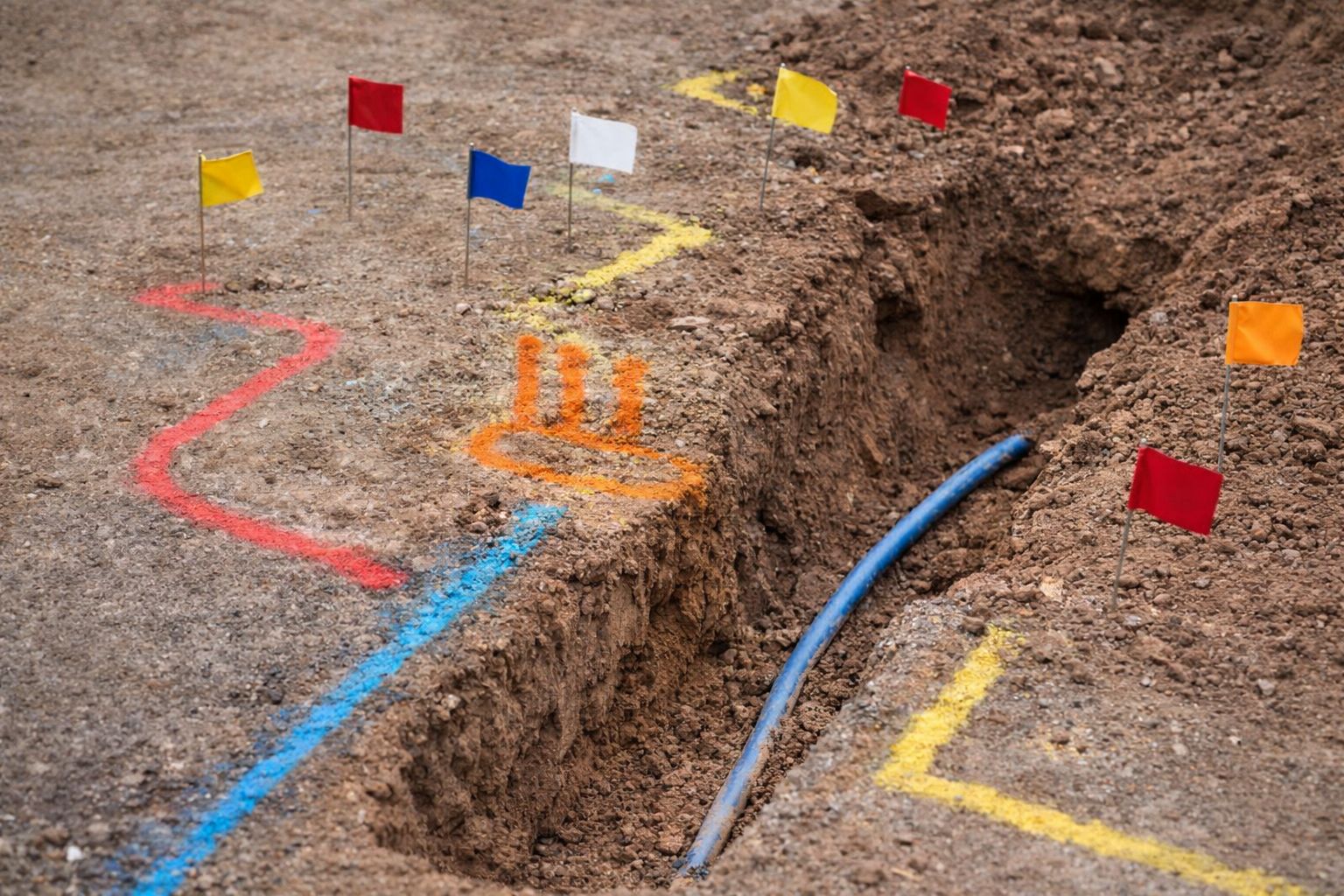
Why Sydney sites are uniquely challenging
Sydney has a mix of old and new infrastructure, tight easements, and layered networks. In older areas, you may find abandoned lines, mixed materials, and services that were moved during renovations. In commercial corridors, there can be multiple comms runs, private electrical feeds, and upgrades that are not reflected on older drawings. This is exactly why a utility locator is essential, because assumptions do not hold up in high-density environments.