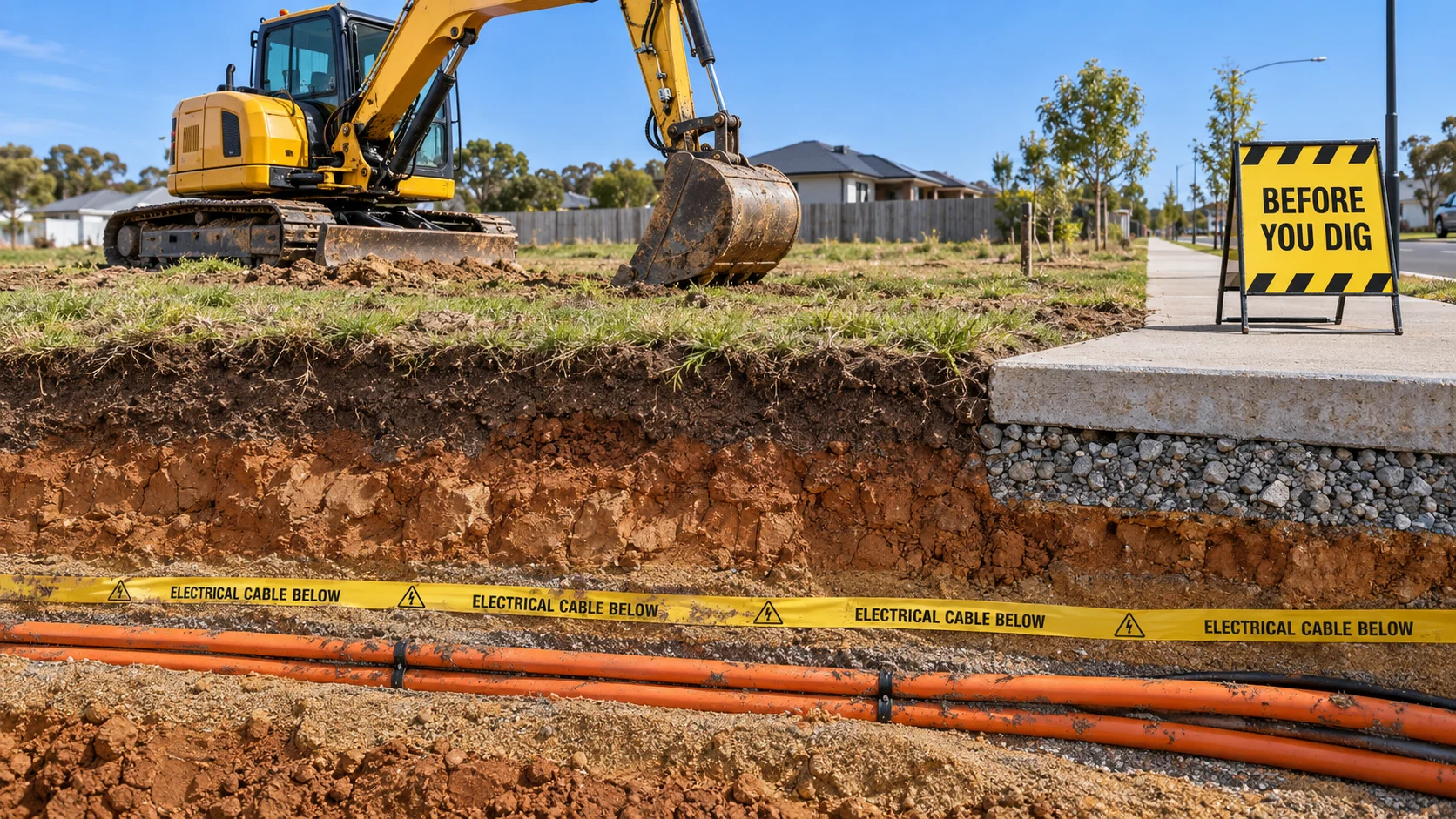
Planning to dig on a property? Whether it’s a new pool, a driveway, a demolition or a major civil job, there’s a good chance power, gas, water, sewer or NBN lines are running underneath. Hitting one can injure someone, cut services to your street and land you with a hefty repair bill.
Two names come up again and again when people talk about safe digging: BYDA and NULCA. This guide explains what each one is, how they work together, and what NSW property owners and contractors actually need to do before breaking ground.
What Is BYDA?
BYDA stands for Before You Dig Australia. It’s a free, national referral service that tells you which underground assets might be near your dig site and puts you in touch with the companies that own them.
It used to be called Dial Before You Dig
You may know it by its old name, Dial Before You Dig (DBYD). It started in Western Australia in 1987, grew into separate services in each state, and has since merged into one national organisation. Same idea, new name.
BYDA doesn’t own the pipes and cables
BYDA is the middle person. It passes your enquiry on to registered asset owners such as electricity networks, gas companies, water authorities and telecommunications providers. Those owners then send you their own plans of what’s in the ground.
It’s free for everyone
Homeowners, builders, councils and large contractors all use the same service at no cost. There’s no excuse to skip it on cost grounds.
How a BYDA Enquiry Works
Lodging an enquiry takes a few minutes online, but you need to give it time before work starts.
Step 1: Lodge your enquiry early
Go to byda.com.au or use the BYDA mobile app. Mark your dig area on the map, describe the work and enter your start and finish dates. Lodge at least one business day before you plan to dig, and make the area a little bigger than you need in case the job grows.
Step 2: Check your confirmation
BYDA emails you a confirmation listing every asset owner affected by your job, each with a sequence number. Keep this handy on site.
Step 3: Collect your plans
Plans come straight from each asset owner, not from BYDA. Most arrive within minutes, but allow up to two business days. If one hasn’t turned up by then, call that asset owner and quote your sequence number.
Step 4: Read the conditions
Each set of plans comes with safety instructions, such as how close you can dig with machinery or when you need a permit. Everyone working on site should understand them before the first shovel goes in.
Step 5: Keep your plans current
Plans expire, usually within about 20 to 30 days depending on the asset owner. If your job is delayed or the scope changes, lodge a fresh enquiry.
Is a BYDA Enquiry Compulsory in NSW?
Yes. NSW is currently the only state where using BYDA before digging is written into law.
What the NSW law covers
Under the Electricity Supply Act 1995 and the Gas Supply Act 1996, anyone excavating near gas or electricity networks must lodge a BYDA enquiry first. This applies to almost all work on private property, including jobs approved by council, as well as work by public authorities and work on underground services.
The few exceptions
The main exemptions are:
- Emergency work
- Potholing (carefully exposing services to confirm where they are)
What about other states?
In the rest of Australia, BYDA isn’t a standalone legal requirement, but workplace health and safety laws still expect you to identify underground hazards before you dig. In practice, skipping BYDA anywhere in the country makes it very hard to show you took reasonable care.
What BYDA Plans Don’t Tell You
A BYDA enquiry is the first step, not the whole job. The plans have real limits that catch people out every day.
Plans show roughly where, not exactly where
Asset owners’ plans are indicative. A cable marked along the footpath might actually sit a metre to the side, or be much shallower or deeper than expected. Ground levels change over the years, and old records aren’t always accurate.
Private services usually aren’t on them
Plans generally stop at the property boundary. The line from your meter to the house, power to a shed or granny flat, private stormwater, irrigation and old abandoned pipes typically won’t appear anywhere.
Not every asset owner is registered
Some owners, such as private sites, older networks or smaller operators, may not be BYDA members at all. Their assets simply won’t show up in your results.
Lodging an enquiry doesn’t protect you
Getting plans doesn’t make you any less responsible. If you damage an asset, you’re still liable, even with a BYDA enquiry on file. That’s why the next step, on-site locating, matters so much.
What Is NULCA?
If BYDA is about getting the plans, NULCA is about the people who find services in the ground. It sets the skills standard that professional utility locators are trained to.
Where NULCA comes from
NULCA was formed in 1994 as the National Utility Locating Contractors Association, a group of North American locating companies. Its Competence Standards for locating technicians have since become a widely recognised benchmark for how locators should be trained.
How it applies in Australia
In Australia, NULCA-aligned training forms part of the pathway to becoming a certified locator. Locators learn locating theory, how to read utility plans and how to use their equipment properly, then sit a practical assessment through the national certified locator program, known as Certloc.
What AS5488 has to do with it
Certified locators also work to the Australian Standard AS5488. It grades how confidently a service has been located, from a rough indication through to a service that’s been physically exposed and measured. That means you know exactly how much you can rely on each mark.
Is it a legal requirement?
No state law says your locator must be certified. However, major asset owners such as Telstra and Optus already require certified locators before anyone can work near their networks, and it’s quickly becoming the industry expectation.
BYDA and NULCA: How They Work Together
Think of it this way: BYDA tells you what might be in the ground, and a trained, certified locator tells you where it actually is.
BYDA gives you the map
The plans show which services are likely in your area and who owns them. It’s your starting point and, in NSW, a legal must.
The locator confirms what’s really there
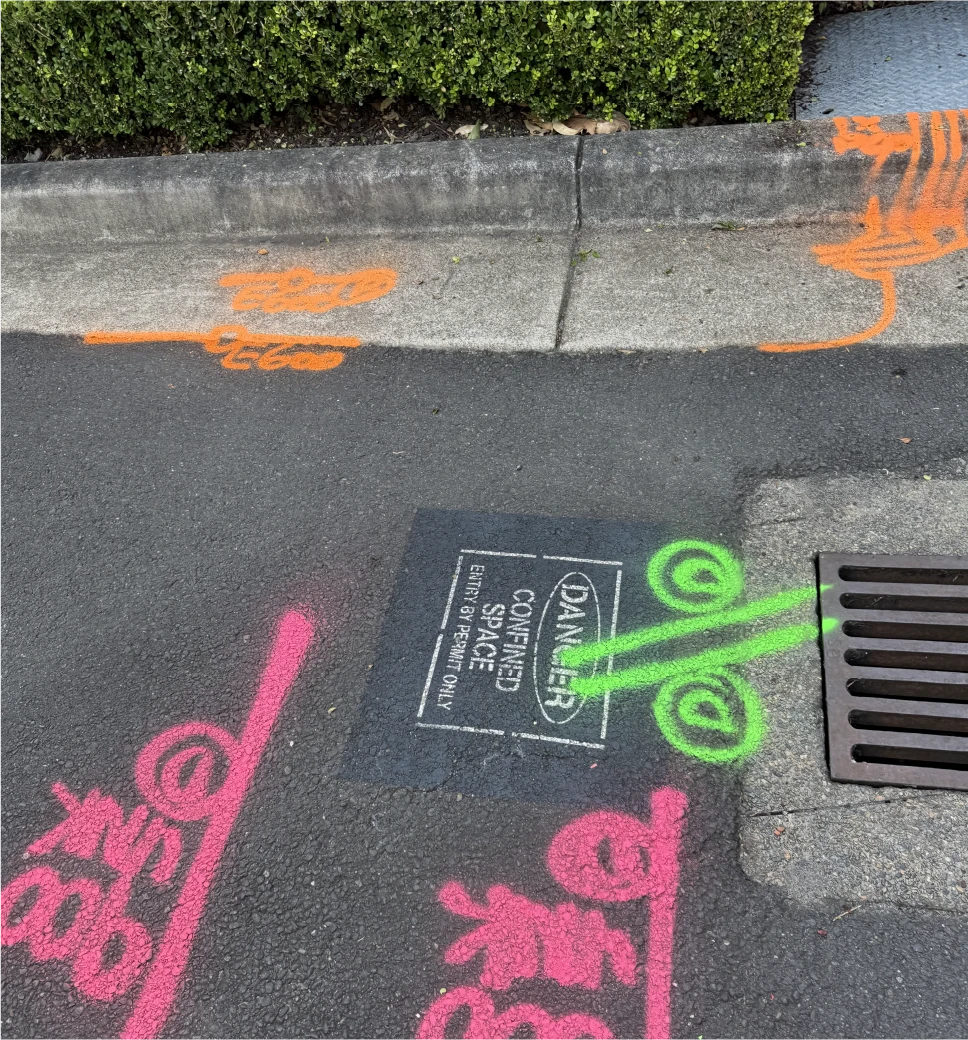
A certified locator takes those plans to site and uses electromagnetic locating and ground penetrating radar (GPR) to trace each service. They mark the positions on the ground with paint or flags, and pick up private services the plans don’t show.
Potholing proves it before machines go in
Before digging with machinery close to a marked service, the excavator should carefully expose it by hand or with vacuum excavation. This confirms its exact position and depth.
Together, these three steps are what safe excavation looks like:
- Lodge a BYDA enquiry
- Get a certified locator to mark services on site
- Pothole to expose services before digging
What Happens If You Dig Without Them?
Skipping BYDA or a locator to save a day or a few hundred dollars can cost far more if something goes wrong.
Someone could get hurt
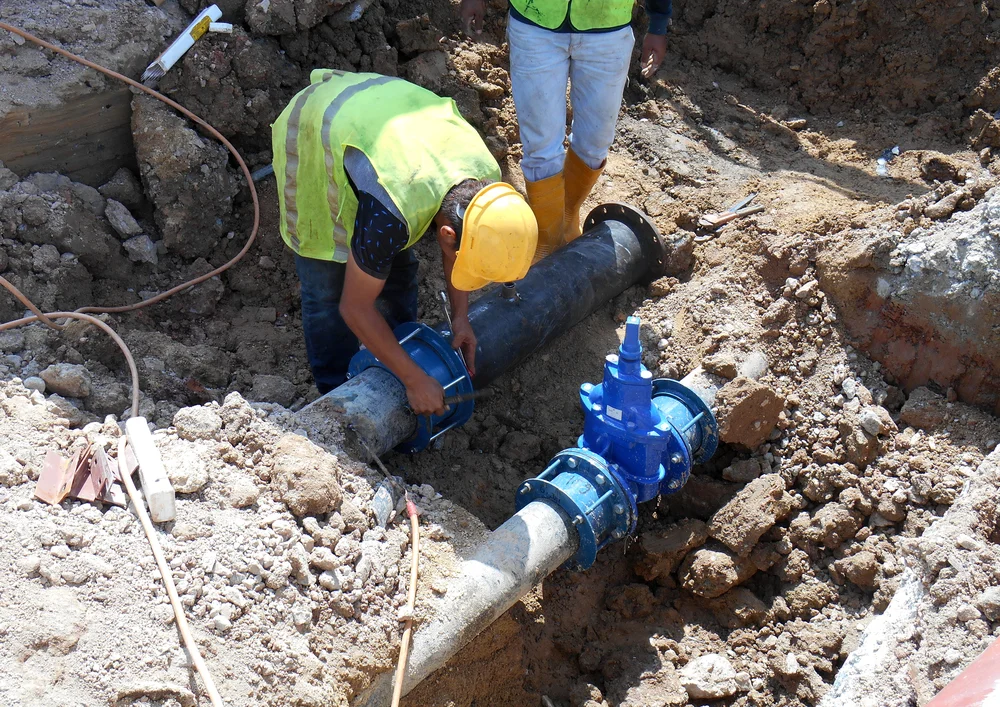
Striking a live electrical cable can cause an arc flash, severe burns or electrocution. A gas strike brings a risk of fire or explosion. These aren’t rare: Australia sees thousands of underground utility strikes every year.
Fines under NSW law
Not lodging a BYDA enquiry is an offence on its own. If you then damage electricity or gas infrastructure, maximum penalties reach $22,000 for individuals and $440,000 for companies.
You pay for the repairs
Network operators can recover the full cost of fixing damaged cables and mains from whoever caused the damage. Repairs to high-voltage cables or fibre lines can run well into the tens of thousands.
Workplace safety prosecution
If workers are put at risk, SafeWork NSW can investigate and prosecute the business, and in some cases its directors personally. Digging without plans or a locator makes it very hard to argue you managed the risk properly.
Delays and hidden costs
A strike can shut your site down while it’s investigated. You may also face claims from neighbours who lost power or internet, and your insurer may ask hard questions about what checks were done.
Who’s Responsible: Homeowners or Contractors?
Anyone can lodge a BYDA enquiry, but the responsibility mainly sits with whoever is doing the digging or authorising it.
If you’re a homeowner
You can lodge the enquiry yourself, and it’s a smart move. If you’ve hired a builder, landscaper, pool installer or demolisher, check they’ve done it rather than assuming. If you’re digging yourself, even for fence posts or a garden bed, the responsibility is all yours.
If you’re a business or contractor
Your team is the one breaking ground, so the legal and safety duty falls mainly on you. Building BYDA enquiries and on-site locating into every job is the simplest way to protect your workers, your clients and your business.
Common jobs that need a BYDA enquiry
- Demolition and site clearing
- Pools and spas
- Driveways, paths and slabs
- Fencing and retaining walls
- Sheds, garages and granny flats
- Landscaping and tree removal
- Trenching for plumbing, drainage or electrical
- Roadworks and civil projects
Dig With Confidence: Let Elite Pipe & Cable Handle It
Elite Pipe & Cable Locating is a Certloc-certified, family-run utility locating business serving Sydney and the Illawarra especially Wollongong. With over 25 years of trade experience and more than 8 years specialising in locating, we take the guesswork out of digging for homeowners, builders, councils and civil contractors.
We take care of the BYDA enquiry
When you book a locate, we handle the background checks for you, including requesting BYDA plans and researching your site. You don’t have to chase asset owners or try to decode technical plans.
We find what the plans miss
On site, we use ground penetrating radar (GPR) and electromagnetic locating to trace power, gas, water, sewer, stormwater and comms lines, including Telstra and NBN. Just as importantly, we pick up the private services that never appear on BYDA plans.
We mark it clearly and document it
Every service we find is marked out on the ground so your team knows exactly where not to dig. We can also provide mud mapping and reports for compliance records or project handovers.
Our simple process
- Book your locate by phone or email
- We request BYDA plans and research your site
- We locate and mark out services on site using GPR and EMF
- You receive a clear summary and next steps
Whether you’re a homeowner putting in a pool or a contractor clearing a demolition site, don’t take chances with what’s underground.
Call Elite Pipe & Cable on 0423 268 677 or email office@elitepipecable.com to book your locate before you dig.